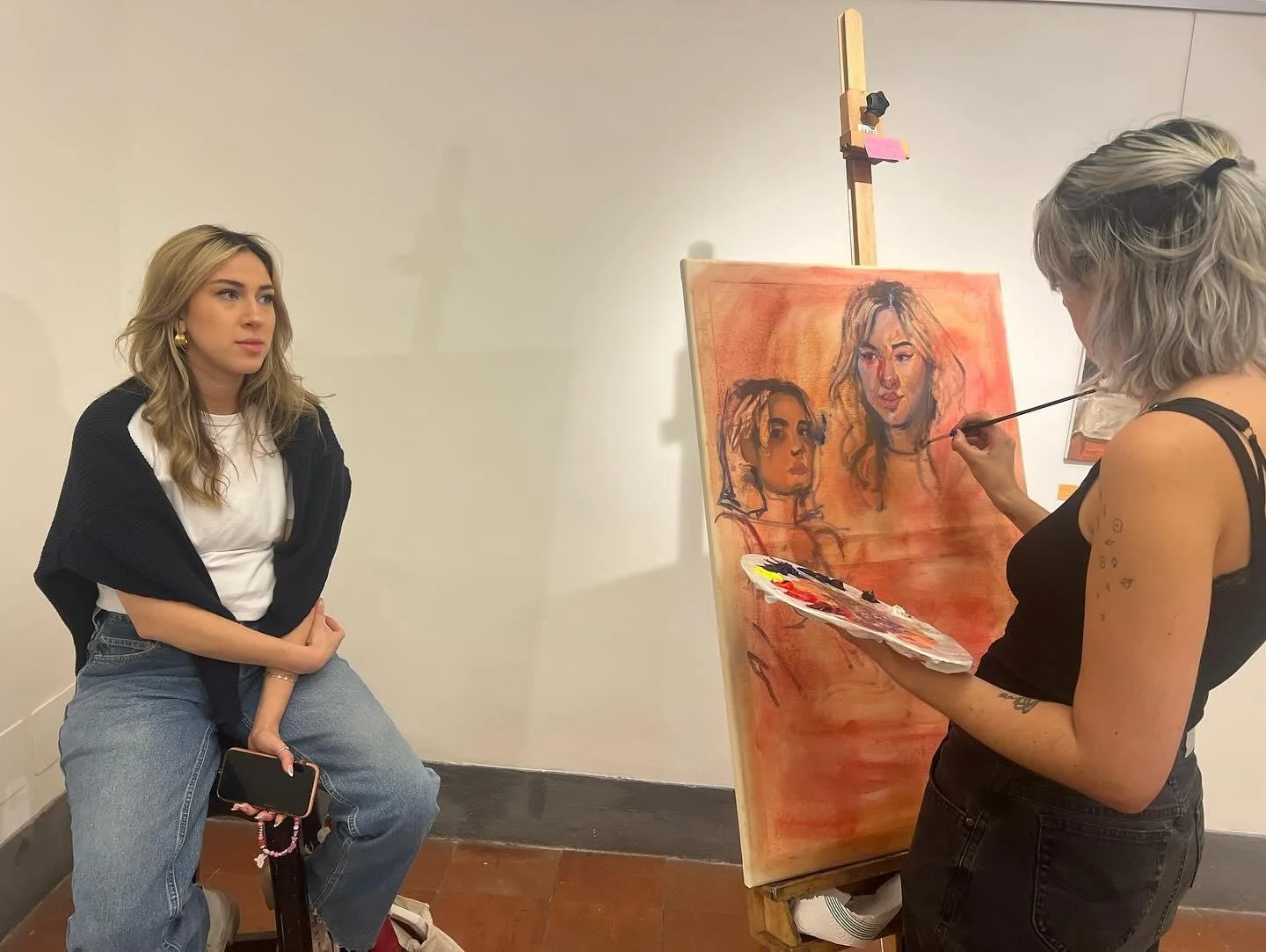
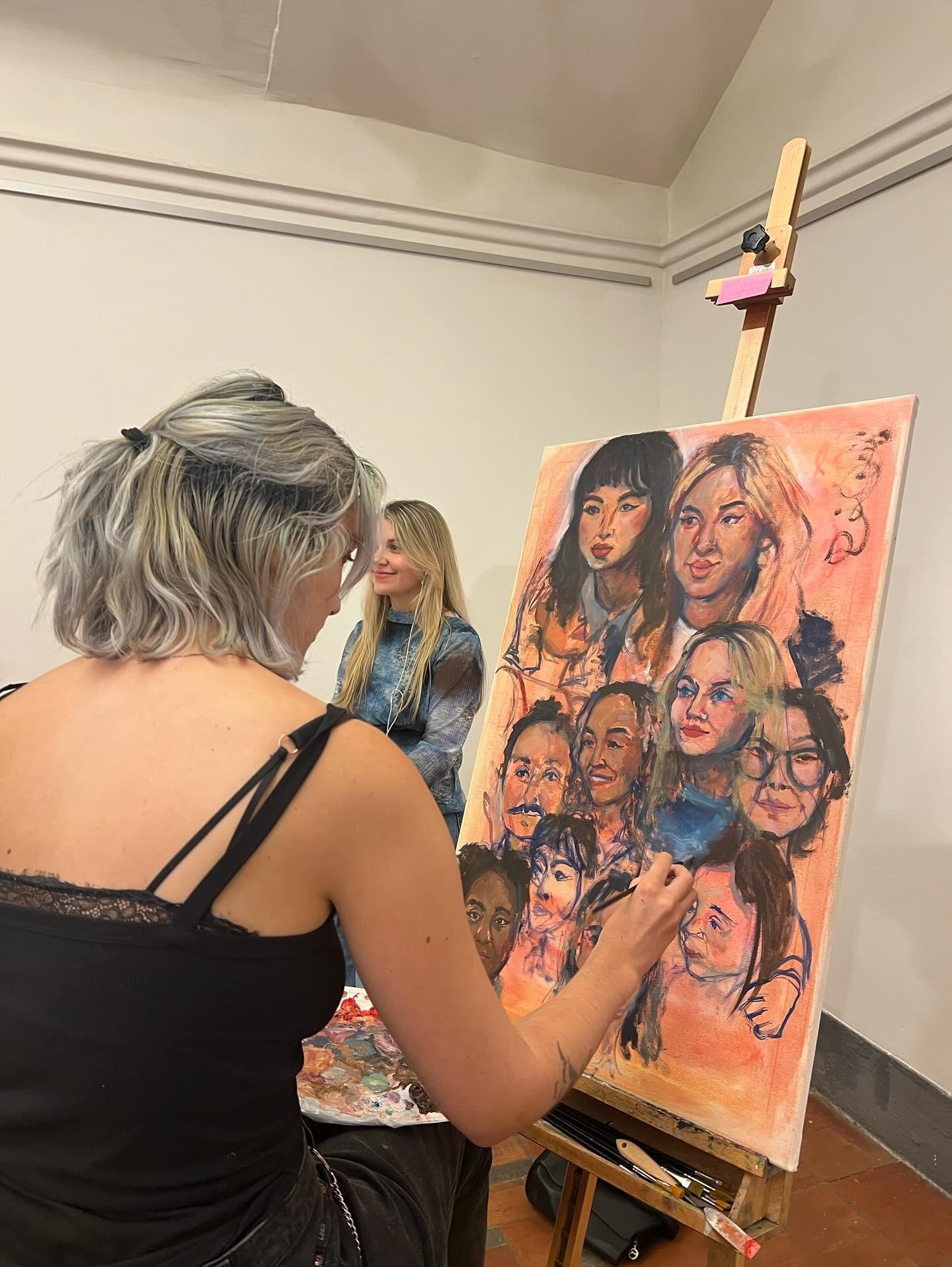
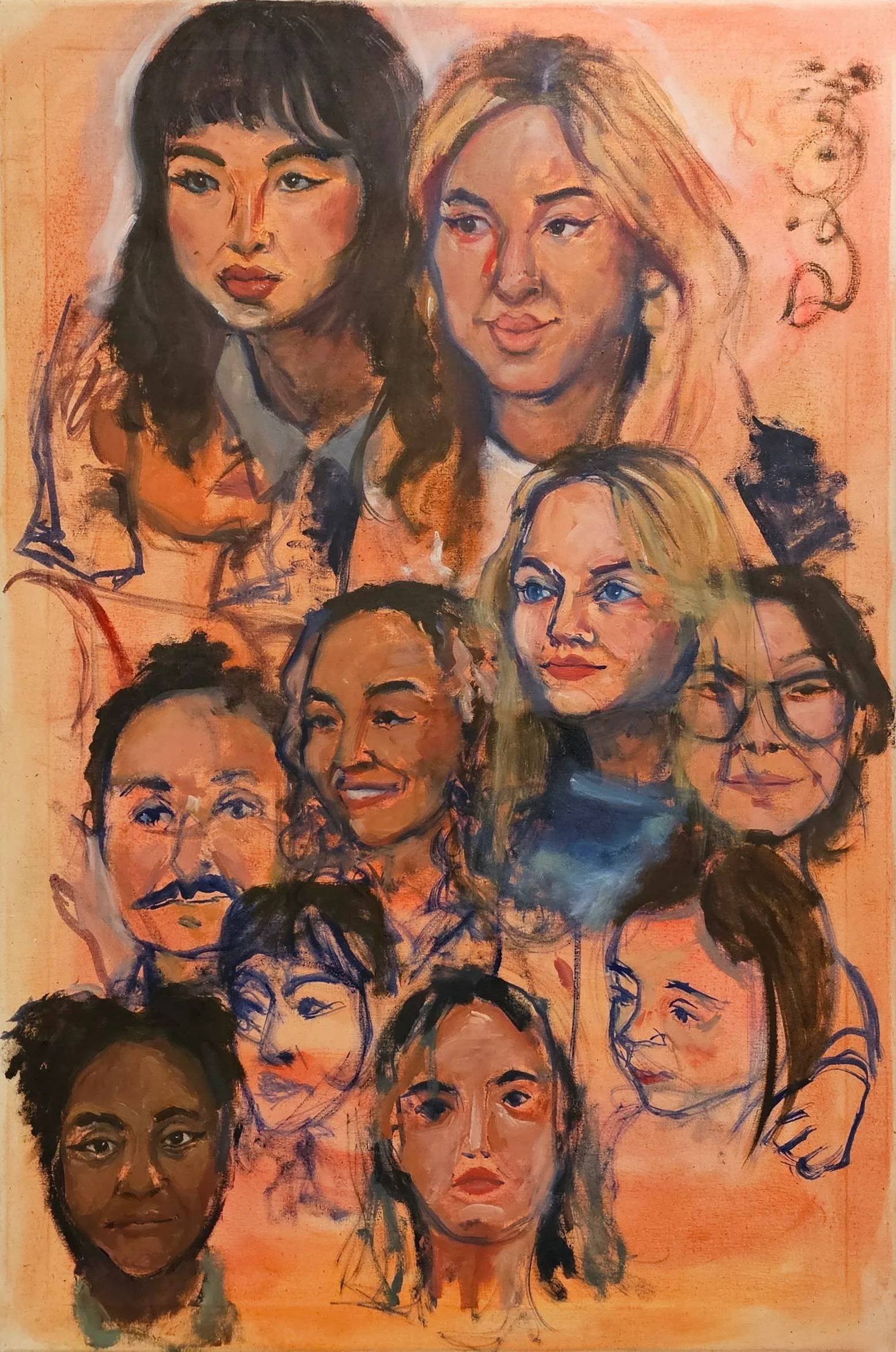
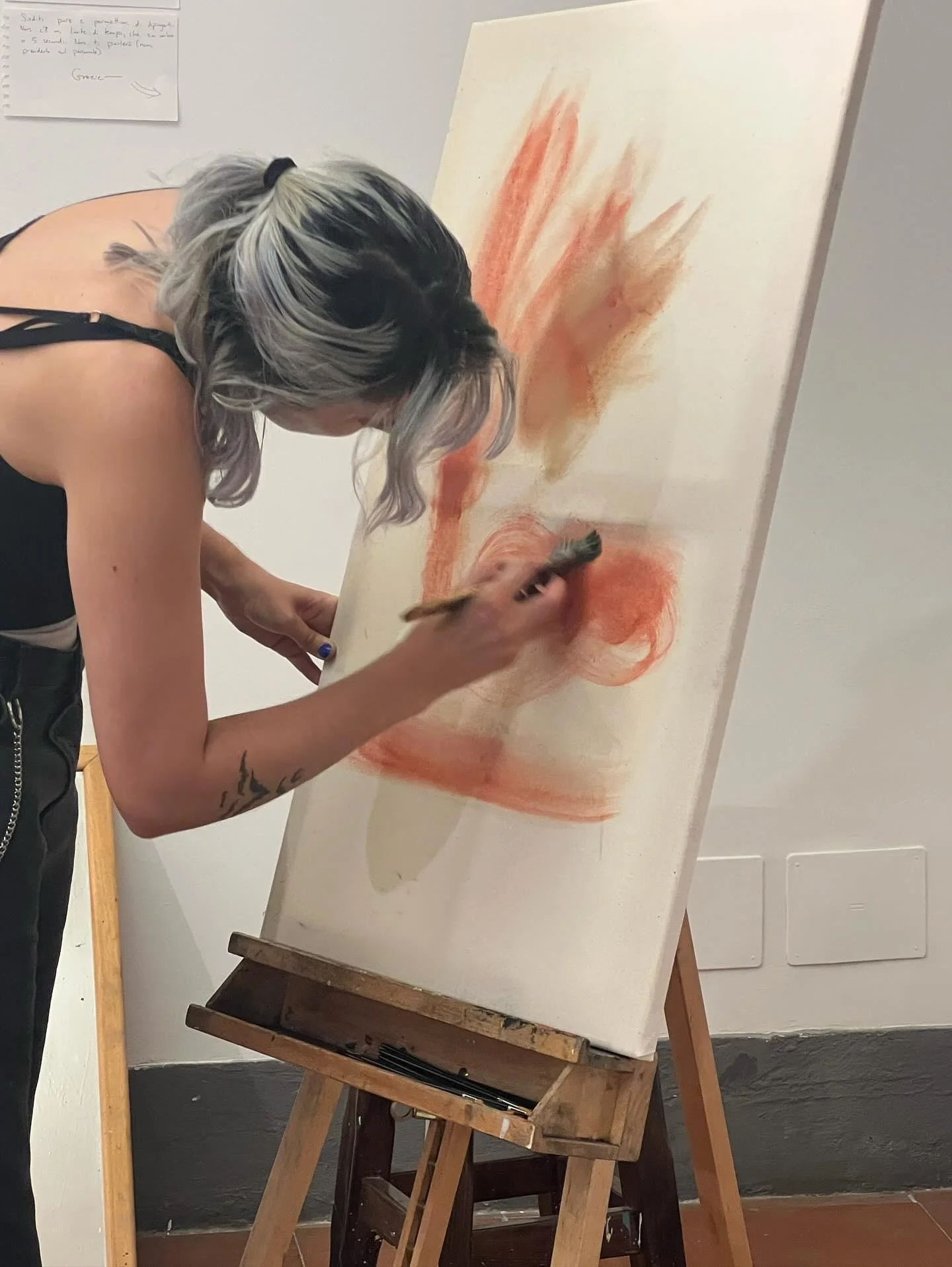
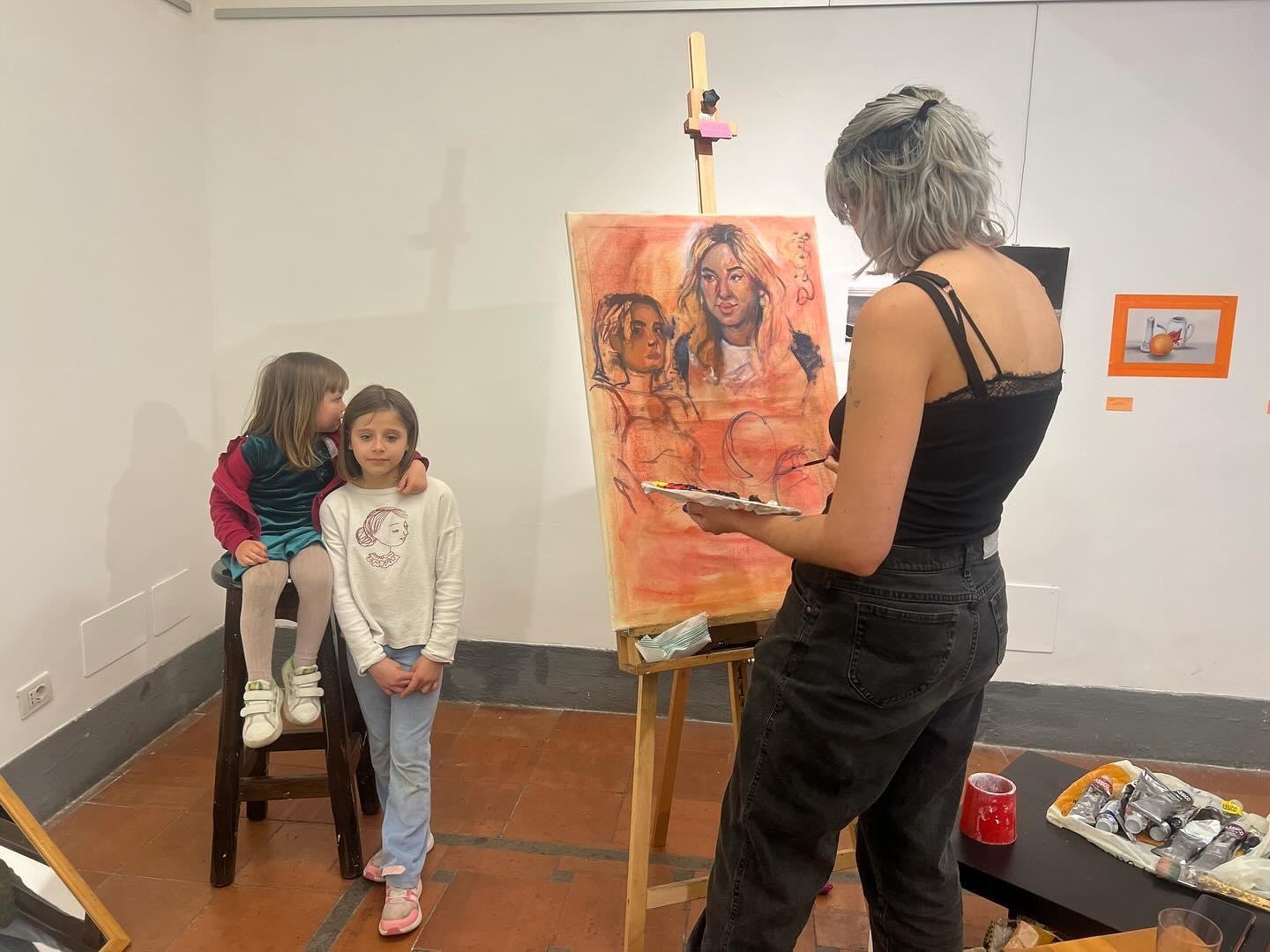
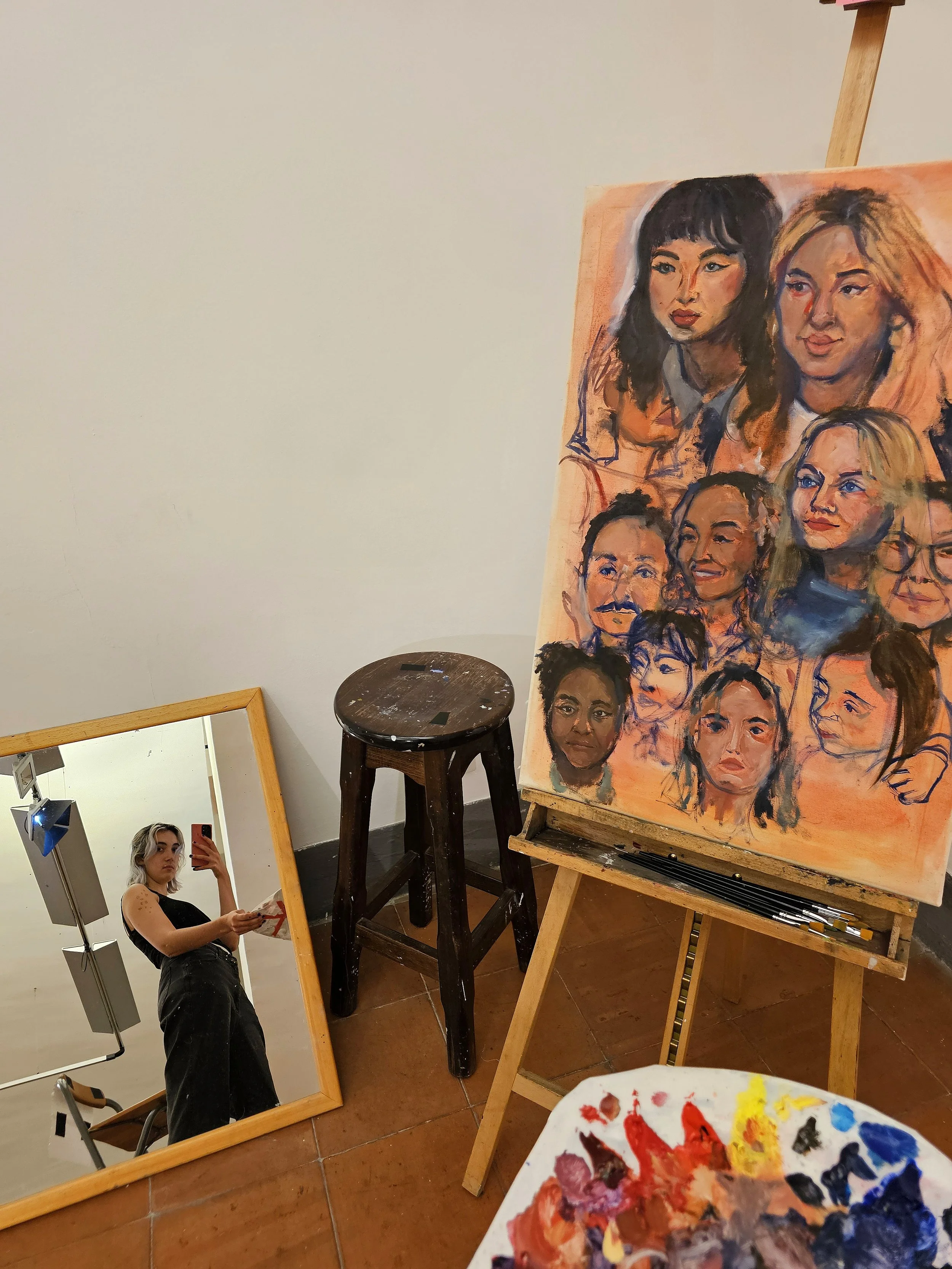
In this first performance, I found that sitters didn’t quite understand that they choose when the painting is finished by sitting for a time of their choice, relying on me to tell them it is done. But this is also interesting! Do sitters inherently expect to be told by the artist when their portrait is finished, or is there a fear of inserting themselves during the painting process to the artist?
In future performances, I would like the guidelines of the performance to be more clear so that I may limit artist intervention. I’m curious how environment might impact this by having the painting area closed off from other inputs. Ideally, I would like the performance to ensue where the sitter and artist do not exchange a word, at least not until the sitter decides their portrait is finished.
I also wonder about varying the “control group” of sitters. How long would professional figure models sit? Or other figure painters? What about setting up the performance in a public space, opening the project to “non-arts” individuals?